The above image is my final narrative storyboard. Using images I have represented the exact feel that I intend for the narrative element of my music video to have. The storyboard details each individual sequence of the video, and I hope to find it useful to refer back to when filming. I detailed the storyline of the sequence within my draft of this storyboard, but it is designed to have a romantic feel overall which will hopefully fit well with the music, and the performance sequence. The storyboard details the more intricate elements of filming, stating not only the shot I intend to achieve, such as wide shots, over the shoulder shots, but whether it is to be a high or low angle, and also whether/ how it would transition to another shot or image. The idea that I have for this narrative sequence, is to layer certain shots over the main feature of my music video - the artist playing the piano, to convey how they are connected, and I will experiment with light and opacity to give the narrative sequence an almost ethereal quality. I have seen this layering done in more modern music videos, such as Taylor Swift's 'Style' and it is very effective, but hopefully this will as give the video my desired contemporary feel, and ensure the video does not become repetitive, but connects with my predominantly 'young' target audience. Lastly, whilst I have planned the narrative sequence on one storyboard, there are several sequences within it that require different locations and props, especially the home movie sequence which requires an old movie camera, and I will therefore strive to film as much as possible, whilst keeping in mind that I may need to film the narrative element of my video in two halves.
Showing posts with label slideshare. Show all posts
Tuesday, 1 December 2015
Narrative Storyboarding - Final
The above image is my final narrative storyboard. Using images I have represented the exact feel that I intend for the narrative element of my music video to have. The storyboard details each individual sequence of the video, and I hope to find it useful to refer back to when filming. I detailed the storyline of the sequence within my draft of this storyboard, but it is designed to have a romantic feel overall which will hopefully fit well with the music, and the performance sequence. The storyboard details the more intricate elements of filming, stating not only the shot I intend to achieve, such as wide shots, over the shoulder shots, but whether it is to be a high or low angle, and also whether/ how it would transition to another shot or image. The idea that I have for this narrative sequence, is to layer certain shots over the main feature of my music video - the artist playing the piano, to convey how they are connected, and I will experiment with light and opacity to give the narrative sequence an almost ethereal quality. I have seen this layering done in more modern music videos, such as Taylor Swift's 'Style' and it is very effective, but hopefully this will as give the video my desired contemporary feel, and ensure the video does not become repetitive, but connects with my predominantly 'young' target audience. Lastly, whilst I have planned the narrative sequence on one storyboard, there are several sequences within it that require different locations and props, especially the home movie sequence which requires an old movie camera, and I will therefore strive to film as much as possible, whilst keeping in mind that I may need to film the narrative element of my video in two halves.
Thursday, 19 November 2015
Shooting Schedule
When filming my music video it is vital that I keep to a time schedule and am efficient, therefore a shooting schedule is needed to remind me of what I should be focusing on and when. I have created a shooting schedule for my initial filming and have attached the image of it below.
My shooting schedule dictates the date of filming, time slots of activity, the set details, a synopsis of what I am doing, the characters needed to be present, the props I need (or need to move in my case), and there is space for my own notes on lighting and camerawork. I intend to be filming between 8:30 and 1:00pm with scheduled breaks and time to create the set/ set up shots. Whilst I am pleased that I have a shooting schedule and I intend to keep to it, I realise that not everything may go to schedule and I therefore have to be adaptable to different circumstances on the day.
Thursday, 8 October 2015
Digipak research - Album Covers
As part of my task alongside the music video I will create, I must also create a digipak. I will research this by looking into the components of a digipak, such as CD covers and booklets, the posters used to promote new albums and the websites of other artists and groups. Moreover, I will research digipaks of the genre of song I have chosen, and outside of this genre to ensure variety in my work. I should be influenced by the designs and styles of all of these digipacks that I will research, which will hopefully give me a clear idea of what I wish to use for my own digipak.
Components of an album cover
The front cover of a CD is usually very straight forward. The front cover will contain only three features in most cases; the photography, the artists' name, and the name of the album. As can be seen from the image to the left, lots of artists use a simple, close-up, 'headshot' style image so as to remain the focus of the cover. Most albums tend also to have the artists' name in large, bold print to stand out and the album title is either the same size, or placed centrally if slightly smaller. Adele on the other hand, has chosen to have both her name and album title in the bottom right hand corner, although the contrast in colours draws the audiences' eye to the title of the album.
Other artists however, such as popular band Coldplay prefer to use art for their cover instead of typical shots of the band/ artist. For their album 'Mylo Xyloto', the band have used a background of vibrant, colourful graffiti and the album cover title takes centre stage, with unusually no mention of the bands name either. This trend of cover art being used for CD covers has been used by artists such as Mika, Green Day, Maroon 5 and Christina Aguilera among others. The non conformist nature of this album cover and others like it, convey that the artist does not want to be typecast, but wants to stay different and unique within the music industry.
The back covers of CDs all tend to have certain features. These are shown in the image to the left of Taylor Swifts CD cover for her album, '1989'. The back cover will always contain a list of the song tracks, the name of the artist and album title along the spine, a bar code, the label name and information, as well as acknowledgements of producers and a tag line prohibiting copyrighting the CD/ filesharing. Some artists such as Swift choose to have an image on the back of the CD cover, this is usually of the artist and fits the theme of the front cover. Swift has used a unique style for her album, it feels nostalgic given the faded colours and handwritten elements of the cover.
Whilst some artists choose to use photography for the back cover as well as the front, other artists such as John Legend choose a simplistic format for the back cover. The cover is minimalistic, featuring only one block colour which matches the floral photography of the front. The track names instantly draw the audience's attention given the bold font and black colour ensuring that they really stand out from the pink.The added features are emphasised by the use of red font colour for the 'Bonus Tracks' which contrasts with the the other colours. The choice of colours are important, as these colours are usually associated with romance and have romantic connotations for the audience, this is an intentional decision by Legend given the romantic theme of the songs on the album, such as 'You & I'
Booklets/ Interior
The interior of CD covers contain a booklet. The booklet has numerous pages and different functions. The booklet uses a variety of additional photography of the artist, reflecting the nature of the album. All booklets contain a page like the photograph on the left. This is taken from Rihanna's album 'Loud' and is an acknowledgements page. Rihanna thanks those important to her in the open letter, including God, her family, friends, management, studio and agents.
The rest of the booklet contains pages like these; dramatic, photographic spreads which emphasise the artist and her creativity which is expressed in the model pose, her vibrant red hair and romantic pose with red roses. The pose conforms also to the male gaze, Rihanna's stance being quite provocative, this is a common feature of Album covers which is evident in the work of artists such as Miley Cyrus and Nicole Scherzinger Many of the songs on the album focus on the topic of love, as this is reflected in the photography of the album. The actual content of the pages is song titles, and credits as to who helped write/ produce the track.
This spread also connotes Rihanna's creative/ free spirit with the emphasis of interaction with nature and her body language conveying her peace. Although Rihanna, and others dedicate this space purely to song titles and credits, other artists use this space to provide the lyrics of their songs to engage with the audience. Bonus Albums frequently add additional material in the digipak to encourage their sales. Rihanna conformed to this promotional tactic and the deluxe version of her album, contains a full Photo-book of Rihanna, a cover art lithograph and 30 minute documentary DVD featuring a behind the scenes look at the making of 'Loud'.
Album covers from my songs' genre - Classical
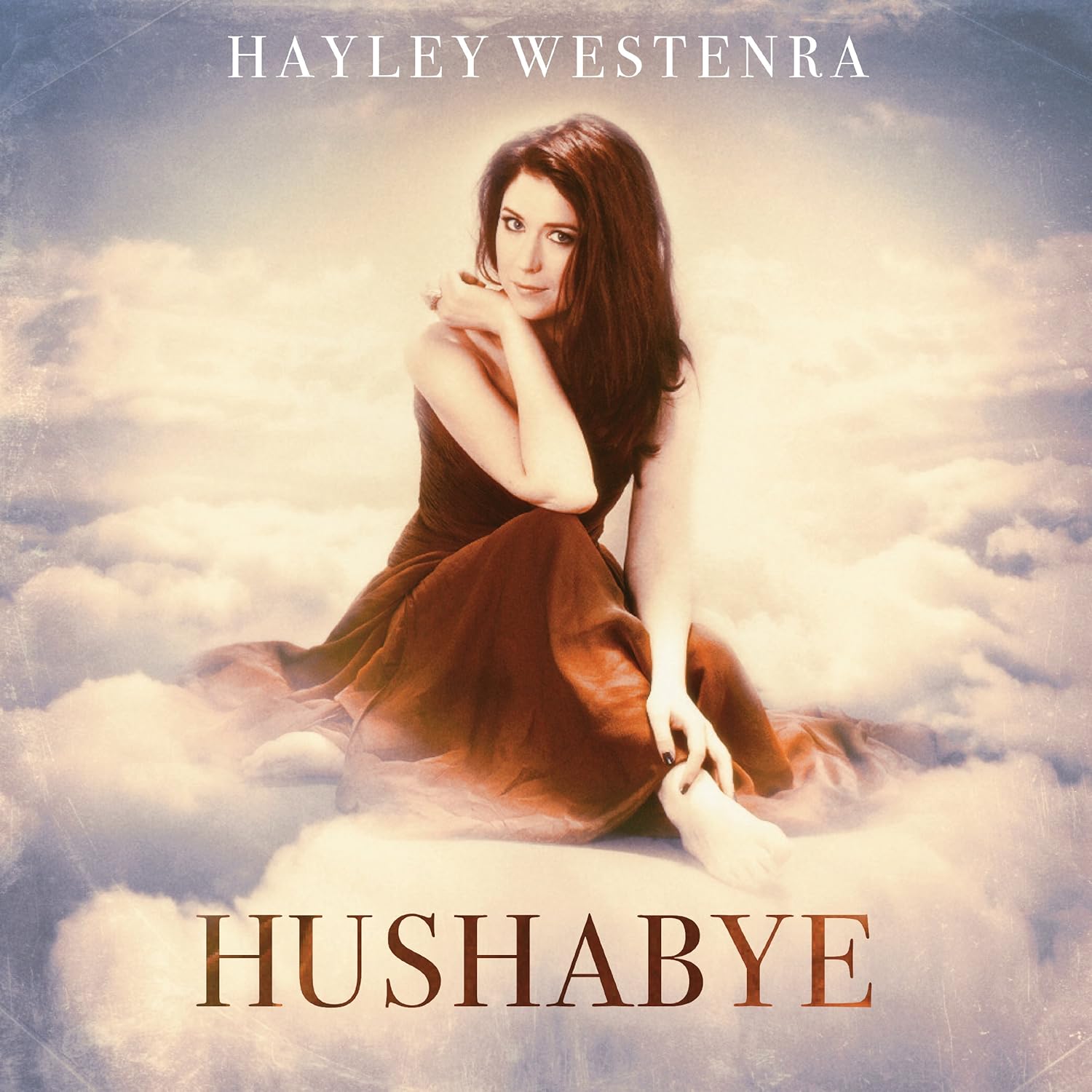
The album cover for classical artist/ singer Hayley Westenra's 'Hushabye' is a good example of the representation of classical artists. The CD cover conforms to the image of classical music being quite ethereal in nature, hence the clouds and 'heavenly' background lighting. The actual cover is fairly simplistic, the font is bold and the name of the album stands out. The shot of Hayley is common of most CD covers as it ensures that the artist is centre of attention, this kind of shot is however usually a close-up, but a long shot is required for this CD cover to emphasise the background. Although this is a typical classical album cover, I find it to be a bit dated and mundane. Therefore I would like to add a contemporary twist to my own digipak, with influences from other genres as well as classical to give my album cover a more modern, colourful look.
The album cover for classical singer, Josh Groban's 'Stages' is of great interest to me. The cover both conforms to, and subverts stereotypes of the genre. The cover features the artist as the main focal point, a common feature of the genre which is seen across the classical and other genres. The cover takes on a modern element that is not typically associated with classical music, through the contemporary use of streaked lighting and background photography of a building and lit sign to reinforce the modern nature of Groban's work, Groban is a classical artist who has modern influences from other genres such as pop and rock, and his album cover is designed to convey this, and the modern nature of his work. This modern twist on a more traditional genre is what I would like to convey through my music video and digipak.
Album covers of a different genre - Pop
Album covers of the pop genre all seem to have the same effect. The cover usually always features a close up of the artist, Selena Gomez's album is no exception to this. However, the rain effect, merging of lights in the background is a clever use of convergence which directly relates to the title of the album, 'A Year Without Rain'. This cover is fairly simplistic, I particularly like the font style and size, it has been placed well so as to just touch Gomez' shot but doesn't overpower it. The contrast of colours through the font ensures that the album title stands out, this tends to be a generic convention of the genre and most album covers use a different, vibrantly coloured font for the album name.
Miley Cyrus' cover for her hit album, 'Bangerz' is vibrant and reflects her alternative style/ persona. A suggestive long shot of Cyrus has been used as the main feature, Cyrus ensures that she is the subject of the male gaze given her provocative stance, and the bright red lipstick which draws the audience to her lips - this could be to conform to generic conventions of the music industry, or as a way of utilising stereotypes for promotional gain. The album cover is brightly coloured to grab the audiences' attention and the vibrant colours and trees in the background give the cover a tropical feel. Cyrus has used bold mutli coloured font for her name, the album title is made to stand out by being written in a fluorescent type and being bright pink so that the eye is instantly drawn to this.
Album covers of a different genre - Rap
The album cover for Eminem's 'Recovery' is not a typical representation of the rap genre. Usually a rap artists' cover will feature a close up of the artist, but will portray the artists' status and lifestyle through expensive gold jewellery and a powerful stance. Eminem's album on the other hand is a total juxtaposition of this, Eminem is not positioned centrally in the shot but the focus is on his name and album title.The album cover reflects the nature of Eminem's songs/ lyrics on the album. The album details Eminem's recovery from a drug and alcohol addiction, this is reflected in the set of the cover and Eminem's contemplative stance.
Kanye West's album cover for 'Graduation' does conform to the rap genre. The cover is brightly coloured, the artist's name and title of the album stands out. It is unique with the representation of the bear, although this is a continued theme across Wests' work and was seen on his album 'The College Dropout' also. The typical features of a rap album, exemplified in this work of West, is the need for a disclaimer in the bottom left corner of the album. The need for this label, detailing that 'Parental Advisory, Explicit Content' is needed for the audience, to inform that strong language, and references to sex, drugs and violence are frequently made within the rap genre - whether the artists' experience of these things or their rebuking of them, it is a safe guarding requirement for both the artist and consumer.
Components of an album cover
Front Covers
The front cover of a CD is usually very straight forward. The front cover will contain only three features in most cases; the photography, the artists' name, and the name of the album. As can be seen from the image to the left, lots of artists use a simple, close-up, 'headshot' style image so as to remain the focus of the cover. Most albums tend also to have the artists' name in large, bold print to stand out and the album title is either the same size, or placed centrally if slightly smaller. Adele on the other hand, has chosen to have both her name and album title in the bottom right hand corner, although the contrast in colours draws the audiences' eye to the title of the album.
Other artists however, such as popular band Coldplay prefer to use art for their cover instead of typical shots of the band/ artist. For their album 'Mylo Xyloto', the band have used a background of vibrant, colourful graffiti and the album cover title takes centre stage, with unusually no mention of the bands name either. This trend of cover art being used for CD covers has been used by artists such as Mika, Green Day, Maroon 5 and Christina Aguilera among others. The non conformist nature of this album cover and others like it, convey that the artist does not want to be typecast, but wants to stay different and unique within the music industry.
Back Covers
Whilst some artists choose to use photography for the back cover as well as the front, other artists such as John Legend choose a simplistic format for the back cover. The cover is minimalistic, featuring only one block colour which matches the floral photography of the front. The track names instantly draw the audience's attention given the bold font and black colour ensuring that they really stand out from the pink.The added features are emphasised by the use of red font colour for the 'Bonus Tracks' which contrasts with the the other colours. The choice of colours are important, as these colours are usually associated with romance and have romantic connotations for the audience, this is an intentional decision by Legend given the romantic theme of the songs on the album, such as 'You & I'
Booklets/ Interior
The interior of CD covers contain a booklet. The booklet has numerous pages and different functions. The booklet uses a variety of additional photography of the artist, reflecting the nature of the album. All booklets contain a page like the photograph on the left. This is taken from Rihanna's album 'Loud' and is an acknowledgements page. Rihanna thanks those important to her in the open letter, including God, her family, friends, management, studio and agents.
The rest of the booklet contains pages like these; dramatic, photographic spreads which emphasise the artist and her creativity which is expressed in the model pose, her vibrant red hair and romantic pose with red roses. The pose conforms also to the male gaze, Rihanna's stance being quite provocative, this is a common feature of Album covers which is evident in the work of artists such as Miley Cyrus and Nicole Scherzinger Many of the songs on the album focus on the topic of love, as this is reflected in the photography of the album. The actual content of the pages is song titles, and credits as to who helped write/ produce the track.
This spread also connotes Rihanna's creative/ free spirit with the emphasis of interaction with nature and her body language conveying her peace. Although Rihanna, and others dedicate this space purely to song titles and credits, other artists use this space to provide the lyrics of their songs to engage with the audience. Bonus Albums frequently add additional material in the digipak to encourage their sales. Rihanna conformed to this promotional tactic and the deluxe version of her album, contains a full Photo-book of Rihanna, a cover art lithograph and 30 minute documentary DVD featuring a behind the scenes look at the making of 'Loud'.
Album covers from my songs' genre - Classical
The album cover for classical artist/ singer Hayley Westenra's 'Hushabye' is a good example of the representation of classical artists. The CD cover conforms to the image of classical music being quite ethereal in nature, hence the clouds and 'heavenly' background lighting. The actual cover is fairly simplistic, the font is bold and the name of the album stands out. The shot of Hayley is common of most CD covers as it ensures that the artist is centre of attention, this kind of shot is however usually a close-up, but a long shot is required for this CD cover to emphasise the background. Although this is a typical classical album cover, I find it to be a bit dated and mundane. Therefore I would like to add a contemporary twist to my own digipak, with influences from other genres as well as classical to give my album cover a more modern, colourful look.
Album covers of a different genre - Pop
Album covers of the pop genre all seem to have the same effect. The cover usually always features a close up of the artist, Selena Gomez's album is no exception to this. However, the rain effect, merging of lights in the background is a clever use of convergence which directly relates to the title of the album, 'A Year Without Rain'. This cover is fairly simplistic, I particularly like the font style and size, it has been placed well so as to just touch Gomez' shot but doesn't overpower it. The contrast of colours through the font ensures that the album title stands out, this tends to be a generic convention of the genre and most album covers use a different, vibrantly coloured font for the album name.
Miley Cyrus' cover for her hit album, 'Bangerz' is vibrant and reflects her alternative style/ persona. A suggestive long shot of Cyrus has been used as the main feature, Cyrus ensures that she is the subject of the male gaze given her provocative stance, and the bright red lipstick which draws the audience to her lips - this could be to conform to generic conventions of the music industry, or as a way of utilising stereotypes for promotional gain. The album cover is brightly coloured to grab the audiences' attention and the vibrant colours and trees in the background give the cover a tropical feel. Cyrus has used bold mutli coloured font for her name, the album title is made to stand out by being written in a fluorescent type and being bright pink so that the eye is instantly drawn to this.
Album covers of a different genre - Rap
The album cover for Eminem's 'Recovery' is not a typical representation of the rap genre. Usually a rap artists' cover will feature a close up of the artist, but will portray the artists' status and lifestyle through expensive gold jewellery and a powerful stance. Eminem's album on the other hand is a total juxtaposition of this, Eminem is not positioned centrally in the shot but the focus is on his name and album title.The album cover reflects the nature of Eminem's songs/ lyrics on the album. The album details Eminem's recovery from a drug and alcohol addiction, this is reflected in the set of the cover and Eminem's contemplative stance.
Kanye West's album cover for 'Graduation' does conform to the rap genre. The cover is brightly coloured, the artist's name and title of the album stands out. It is unique with the representation of the bear, although this is a continued theme across Wests' work and was seen on his album 'The College Dropout' also. The typical features of a rap album, exemplified in this work of West, is the need for a disclaimer in the bottom left corner of the album. The need for this label, detailing that 'Parental Advisory, Explicit Content' is needed for the audience, to inform that strong language, and references to sex, drugs and violence are frequently made within the rap genre - whether the artists' experience of these things or their rebuking of them, it is a safe guarding requirement for both the artist and consumer.
Wednesday, 30 September 2015
The Andrew Goodwin Theory
The theorist Andrew Goodwin writes in his book, 'Dancing in the Distraction Factory' that there are a number of features which are seen consistently within music videos.
1. The Features
Music videos frequently display genre characteristics. For example, conforming to the stereotypes frequently associated with music videos- a girl group performing a dance routine in a pop video or a heavy metal band having a purely performance video on stage extc.
In complete contrast is pop girl group 'Little Mix''s video for 'Fly'. As expected according to Goodwin's theory the video adheres to the stereotypes/ characteristics of the genre and the result is a peppy, upbeat performance based video, focusing on the dance routine and close ups of the band.
2. Relationships - Lyrics
Goodwin also makes the connection between the lyrics and visuals of a music video, whether these be illustrative, amplifying or contradicting.
Some music videos contain an illustrative quality, whereby the lyrics of the song are illustrated to the audience visually throughout the video.
Equally, other types of music videos as identified by Goodwin are amplifying in nature, whereby the lyric of the song is presented in the video to an exaggerated extent to reinforce the lyrics.
The video for The Black Eyed Peas' 'Where is the love?' is an example of a video with an amplifying nature. The lyrics of the song contemplate the world, and how nobody cares for one another, "people killing, people dying". These lyrics are amplified by the visuals of the video as the artists are shown to be handing out flyers across the city of a question mark, referencing the title of the song. The video also exaggerates and focuses on crimes, and uses emotive close ups of children singing to amplify the point of the song and the video.
Another feature of this kind of relationship between lyric and visual is contradicting, this is whereby there is either no correlation between the lyrics of the song and the music video or they are deliberately different to make a point.
Maroon 5's video for 'Misery' is contradicting as the lyrics "I am in misery" are clearly contradicted within the video by Adam Levine's emotions and body language. The sequence does seem to match the lyrics initially as the actress in the video inflicts pain on Levine by punching, kicking and stabbing Levine - all conforming to the theme of misery. However, close ups of Levine's facial expressions and the close physical contact between him and his 'abuser' show him to be enjoying his apparent 'misery'.
3. Relationships - Music
Goodwin has also concluded in his theory that there is a distinct relationship between the music of a video and the visuals, again either illustrative, amplifying or contradicting. The correlation between the music and visuals is that the tone of the actual song complies with the lyrics and visuals of the music video.
The video for The Fray's 'How to Save a Life' is a perfect example of the illustrative and amplifying nature of a music video which has a strong link between music and visuals. The lyrics and melody for the song are very sad, reflecting the subject of the song and therefore the video too has an ethereal, deathly quality given the slow paced editing to reinforce the slowness of the song, and elements of mise-en-scene; such as the white background and close ups of expressions of pain on children/ adults' faces. Therefore overall there is a sense of convergence in the music and visuals of the video.
4. The requirements of the record label
Record labels often have certain demands for their artists, these may include the need for certain effects such as close -ups of the artist, and the artist may then subsequently retain a certain visual style (motif) which is carried across numerous videos/ their work.
The video for One Directions' 'What Makes You Beautiful', is an example of how the requirements of the record label are enforced. The video contains various close up sequences of individual band members as they each sing their own line, (a generic convention of boy band videos) but has a second close up sequence specifically for the band member Harry Styles - signifying his importance and leadership of the band. The distribution of close up sequences, and visual style of Harry being the most prominent member is carried across all of One Directions' music videos.
5. Voyeuristic treatment of women
Goodwin also comments on the presentation of women being 'looked' at within music videos, camera angels/ shots focusing on the female body provide the opportunity for voyeuristic treatment and the stereotypical sexualisation of women often occurs in the music industry.
Professor Green's remake of the hit 'Just Be Good To Me' (Green) is an example of the treatment of women in the music industry. The video centres around a conveyor belt of women, all wearing limited/ provocative clothing surrounding Green who is relaxing in a chair whilst the women parade around in front of him. The focus on the women and rapid sequence of close up/ mid angle shots emphasising body parts of the women such as legs, hips and bottoms dehumanises them and make them the subject of the 'male gaze'.
6. Intertextual Reference
Finally, Goodwin notices within his theory the use of intertextual reference in music videos. These intertexual references may be regarding film, Television programme, music videos and other media.
Madonna's music video for 'Material Girl' is an example of how a music video can use intertextual references. The video references the film 'Gentleman Prefer Blondes' and the song 'Diamonds Are A Girl's Best Friend' sang by Marilyn Monroe. In her video Madonna replicates the iconic dance routine performed by Monroe exactly and has been used, as the subject of the two songs are very similar - both discussing the importance of valuable material items. Therefore this is an example of how Goodwin's theory is used practically in the music industry.
Friday, 25 September 2015
The Male Gaze
The male gaze is a theory put forth by Laura Mulvey in her 1975 essay entitled, 'Visual Pleasure and Narrative Cinema' within the essay Mulvey addressed the representation of women within film and how women are frequently sexualised given the dominance of men in shots and how the audience usually watches something from the perspective of a heterosexual male, but also how the woman is always the subject of the male gaze - women are positioned to please in a voyeuristic manner.
Mulvey's theory relates directly to the music industry and how women are presented in music videos as women are frequently the subject of the male gaze within a male artists video or make themselves the subject of the male gaze through the camerawork of their own music videos as 'sex sells'. Controversial music videos such as Miley Cyrus' 'Wrecking Ball' have been criticised for their conformity to the male gaze theory and sexualisation/ objectification of women.
-Minaj becomes the object of the audiences' male gaze by the angle of the camera, her seductive stance, and the focus on her eyes and lips, typically associated as the most attractive part of a woman to the heterosexual male audience and complying with the male gaze.

- Minaj subsequently becomes the object of artist, Drake's male gaze. The positioning of this sequence is important as the male is given a chair and status/ dominance, whilst Nicki crawls along the ground instantly devaluing her and making her the subject of Drake's male gaze. This is encouraged by Minaj and her provocative stance/ clothing.
WARNING - This video contains explicit content.
Male artists such as Robin Thicke have been criticised for objectifying women in their music videos and adhering to the male gaze theory. The video contains the artists interacting with and staring at, three models in limited clothing (topless in the original video) with plastic wrapped around them in some cases - the use of the plastic highlights the sexualisation/ objectification of the woman and shows them to be (in accordance with Mulvey's findings) present purely for the voyeuristic pleasure of the male artists and male, heterosexual audience. The models in the video are both the subject of the male artists' male gaze in which they leer at the women, blowing smoke in their faces, counting out dollars and dancing with them, however the woman are presented as enjoying this which conforms to the theory of the male gaze in which women are pleased to be the object of sexualisation.

- The positioning of this close up shot is designed to make the model the object of the male gaze. The emphasis of the shot is of the model's bright red lipstick, drawing the audiences' eyes to her lips and the subsequent seductive placement of her finger - this positioning conforms to Mulvey's theory of women being positioned in a socophillic manner to please the male audience.

- This shot is a clear indicator of how within music videos women are often the subject of the male gaze, from either the (male, heterosexual) audience or the other character in the shot. In this case it is clear that the model is the subject of Robin Thicke's male gaze as is evidenced by his stance towards her.
- Lastly, this shot conforms to Mulveys' argument that within film/ music videos women are presented in a sexual manner by camera shots which linger on the woman's body and encourage the male gaze to occur, like within this shot which precedes to have the toy car roll down the models back emphasising her curves.
Mulvey's theory relates directly to the music industry and how women are presented in music videos as women are frequently the subject of the male gaze within a male artists video or make themselves the subject of the male gaze through the camerawork of their own music videos as 'sex sells'. Controversial music videos such as Miley Cyrus' 'Wrecking Ball' have been criticised for their conformity to the male gaze theory and sexualisation/ objectification of women.
Anaconda
WARNING - This video contains explicit content.
Female artists such as Nicki Minaj have also utilised the male gaze theory to promote their music. Minaj parodies Sir Mix-a-Lot's track 'Baby Got Back' within the video and follows the sexual nature and provocative dancing which evokes the male gaze. The camerawork of the video focuses on shots of Minaj's body and minimal clothing, her dancers and the provocative routines are use intentionally to ensure the audience views Minaj in socophillic manner. Minaj ensures that she is the subject of the male gaze from the audience, when performing to the camera and then equally she is the subject of the male gaze by the artist 'Drake' who appears in the video.

- Minaj subsequently becomes the object of artist, Drake's male gaze. The positioning of this sequence is important as the male is given a chair and status/ dominance, whilst Nicki crawls along the ground instantly devaluing her and making her the subject of Drake's male gaze. This is encouraged by Minaj and her provocative stance/ clothing.
Blurred Lines
WARNING - This video contains explicit content.

- The positioning of this close up shot is designed to make the model the object of the male gaze. The emphasis of the shot is of the model's bright red lipstick, drawing the audiences' eyes to her lips and the subsequent seductive placement of her finger - this positioning conforms to Mulvey's theory of women being positioned in a socophillic manner to please the male audience.

- This shot is a clear indicator of how within music videos women are often the subject of the male gaze, from either the (male, heterosexual) audience or the other character in the shot. In this case it is clear that the model is the subject of Robin Thicke's male gaze as is evidenced by his stance towards her.
- Lastly, this shot conforms to Mulveys' argument that within film/ music videos women are presented in a sexual manner by camera shots which linger on the woman's body and encourage the male gaze to occur, like within this shot which precedes to have the toy car roll down the models back emphasising her curves.
Wednesday, 9 September 2015
Generic Conventions Of A Music Video
The generic conventions of a music video encompass various different elements of the video, ranging from the type of video; to fit a certain theme, the camerawork, the editing, lighting and the mise-en-scene.
Camerawork
The generic conventions regarding camerawork are extremely evident when watching a music video.
Editing
Camerawork
The generic conventions regarding camerawork are extremely evident when watching a music video.
- The video will usually contain a selection of shots and angles to keep the video interesting and varied. The most well known camera angle used for music videos is undoubtedly the close up, or extreme close up of the artist lip syncing which is usually following a long or wide shot of a dance sequence.
![]() |
| An extreme close up from Meghan Trainor's 'Dear Future Husband' |
![]() |
| A close up of Madonna's 'Vogue' |
- The other form of camera movement which is a generic convention of the genre is the use of pans, whip pans, crane shots and the use of dolly's for tracking which lets the audience move with the pace of the performer/ dancers.
The editing of a music video can differ massively dependant on what the director wants to communicate to the audience, however the main generic convention is the lack of continuity, switching between artist, story line and instrument is typically of most music videos.
- The styles of editing; jump cutting and montage editing are usually dictated to by the music itself. Many music videos contain editing which gives the impression of 'jumping' from shot to shot to the beat of the music, although continuity editing (like in Sia's 'Chandelier) can be used also to create a smoother appearance.
Rihanna's 'Disturbia' is a perfect example of how editing is used alongside the music, each cut matching a beat.
Lighting
The generic conventions of lighting for music videos are fairly extreme as lighting is so key in setting moods, although some music videos choose to have naturalistic lighting to carry a storyline, the norm is to use lighting expressively being either very high key or very low key.
- Extreme artificial light, or 'bleaching' can be used on the artists during close ups to give them an ethereal quality which makes them seem powerful and almost ageless
![]() |
| The use of 'bleaching' in Taylor Swift's 'Style' |
- The use of black and white contrasted with colour for effect on choruses and flashbacks is another popular lighting technique within music videos, as is strobe lighting which is predominantly a generic convention of pop videos.
![]() |
| Strobe lighting in Jennifer Lopez' 'On The Floor' |
- Lastly, another common form of lighting used in different videos is the technique of CGI to create futuristic sets for the dancer to perform in which fit the theme of their music video.
![]() |
| CGI as is used in Katy Perry's 'E.T.' https://www.youtube.com/watch?v=L8eRzOYhLuw - Please click on the link to view Ariana Grande's 'Break Free' another example of CGI within a music video.
Mise-en-scene
The generic conventions of mise-en-scene contain the elements such as; costume, lighting, acting, make up and props, positioning and setting. The mise-en-scene can be put together collectively to emphasise a theme or storyline within the video.
Iggy Azalea ft Britney Spears' 'Pretty Girls'
|
Subscribe to:
Posts (Atom)


.jpg)